Most of the places we stay Bernie says it's his new favourite place. After we'd been at Waipiata domain for a week, it was time to move on - even though Bernie wasn't so keen. For us, the domain was easy to stay at.
Oodles of space.
Dog friendly.
Great weather.
Loads of places nearby to explore.
And I think the most amount of campers there at one time were five!
The evening before leaving Waipiata, I drove up to Hamiltons. I'd heard about an historical gold mining cemetery with magnificent views across the Maniototo plains. When we visited the old tuberculosis sanatorium a week before we'd driven further along the road to see the Hamiltons but because we didn't have a map we weren't sure how far along the road it would be. We turned around after a couple of kilometres, and it turned out, we had turned back only a few hundred metres short of seeing the sign to the Hamiltons!
Just as the sun was setting, I set off, the golden hour was approaching making it a lovely time of the day for sight seeing. This time it was easy to find.
The Hamilton's township was situated on the northern slopes of the Rock and Pillar range above Patearoa. It was named after Captain Hamilton - the owner of the sheep run where the gold was found in 1863.
To begin with the gold deposits were rich, providing excellent returns. Near the end of 1863 around 2000 miners worked there, as time passed more hopeful miners arrived until the population peaked at 4000! At one stage the township had 25 hotels and 40 different stores. Unfortunately due to a scarcity of a constant water supply for both gold-mining operations and the community, the Hamilton's township didn't last long. And by the early 1900s there was little evidence left of the town.
The Hamilton's cemetery has been restored by a local group, the 'Friends of Hamiltons', and lies behind a stone wall. The cemetery commemorates many pioneers of Hamilton's community and records the hardships and tragedies that occurred.
A memorial plaque recording the names of those that are buried there.
I didn't stay long - it's probably silly, but I felt as though I was intruding not knowing anyone who had been laid to rest there.
It was only 10kms back to Waipiata so I was home in no time. There was very little packing up that needed to be done for our departure the next morning.
Our plan was to call into Ranfurly to fill up with water and empty the tanks - our destination was Butchers Dam, 10kms south of Alexandra.
Showing posts with label Central Otago. Show all posts
24 January 2018
Oturehua - Central Otago
The old general store in Oturehua brought back many memories of the General Store my Grandfather and then my father owned in Hanmer Springs. This blog post is for my Dad, which I'm sure will bring back a few nostalgic memories looking at the display of products and the old shop equipment.
This historical Gilchrists Store has been serving the public since 1902, making it the longest continuously trading store in New Zealand.
It's like a museum but still operates as a store, where commodities can be bought (such as bread, milk, ice-creams, fresh fruit & veggies, pies, and some groceries).
Across the road from the store was the Oturehua hotel ... I liked the sign out the front!
This historical Gilchrists Store has been serving the public since 1902, making it the longest continuously trading store in New Zealand.
It's like a museum but still operates as a store, where commodities can be bought (such as bread, milk, ice-creams, fresh fruit & veggies, pies, and some groceries).
Across the road from the store was the Oturehua hotel ... I liked the sign out the front!
Ophir - A Delightful Central Otago Town
If I had to choose a town in Central Otago to move to, my top choice would be Ophir (and Naseby would be right up there too!). This quaint little town was once the busiest gold-mining towns in the Manuherikia Valley. Another claim to fame is that it holds the record for the coldest temperature in the country at -21 degrees!
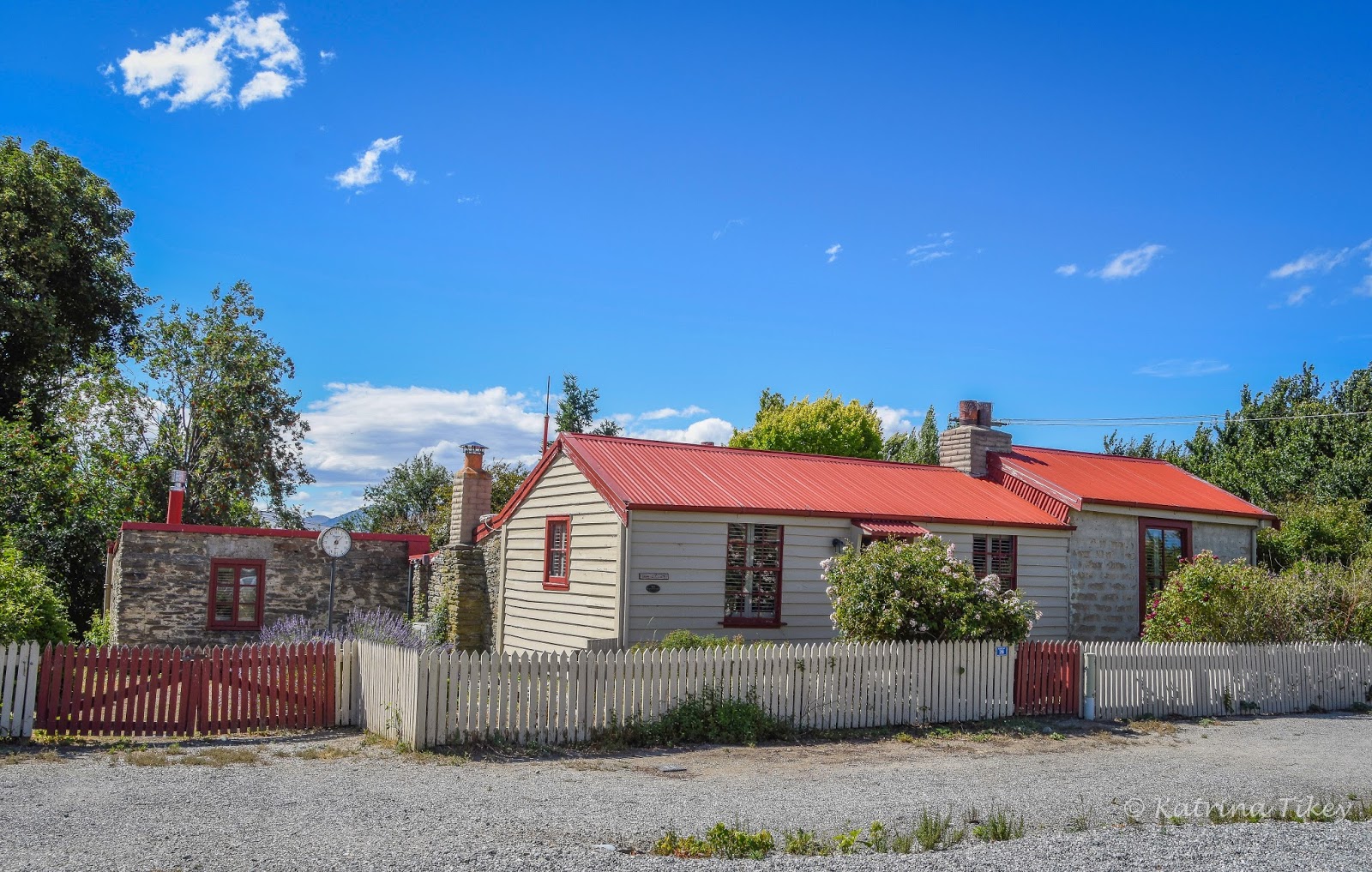
Ophir has an instant appeal and adding to its charm are the lovingly restored historic buildings and hollyhocks randomly growing along the roadside.
In 1886 the Ophir Post Office and Telegraph Office opened - it's still open every week day (for 3 hours), making it the the longest running Post Office in New Zealand. You can buy a postcard from the Post Office and frank your own mail with the unique pick and shovel gold mining postmark. Any letters sent from this post office have the original VR (Victoria Regina) rubber stamp postmark. The locals go there to collect their mail instead of having it delivered to their house - making it an ideal place to meet for a chat.
Originally this bustling gold-mining town was named Blacks after the Black brothers who owned the farm where gold was discovered in 1863. Several years later, in 1875 it was named Ophir after the biblical place where King Solomon gained gold for the temple in Jerusalem.
The hotel at Ophir still has the name 'Blacks Hotel'. The Art Deco style Blacks Hotel was established when a new bridge crossing the Manuherikia River was built. An Irishman named Micky used to keep the community amused with his exploits and sayings. Apparently when electricity came to the district, Micky installed power and as the story goes it took him three days before he found how to turn it off!
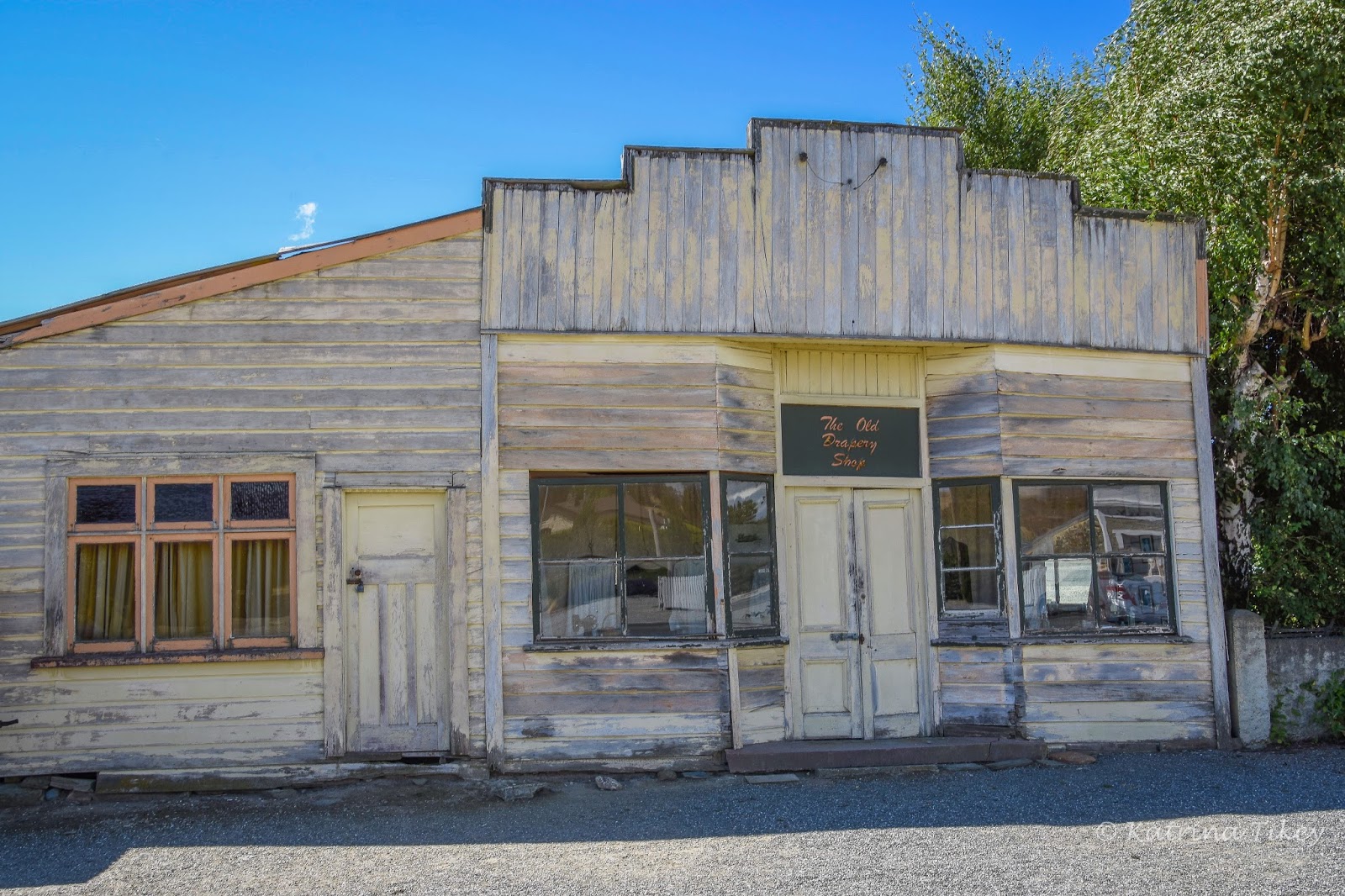
One of the buildings that caught my eye was The Old Drapery Shop, with a novel way of holding the roofing in place!
Below is a photo of the stone barn with a lean to of iron and a two stall stable behind. It belonged to the McKnight brothers who used to build horse - drawn vehicles many years ago. It was also used as a smithy and a hay barn*.
The Ophir Hall was built by John McKnight, a local builder, and named the Ophir Peace Memorial Hall. It has an excellent dancing floor with boards only 5cm wide. Today it's still used for community functions and events*.
The 1880 suspension bridge with stone piers crosses the Manukerihua River. The bridge is named after a 19th century Irish nationalist, Daniel O'Connell, as a reminder of the Irish miners that came to the area.
The local sheep can obviously tolerate extreme temperatures, with scorching hot summers often reaching mid 30s and winter temperatures that drop well into the minuses! I spotted these Ophir sheep relaxing on the edge of a rocky tor - proof that not much fazes them.
Close to Ophir on Ida Valley Road is an old restored miner's cottage known as MacTavish's Hut. This two-roomed hut was built on an acre of parched mining land owned by Lockhart MacTavish. At one stage it was occupied by a goldminer named Clem Daniels who died there at an old age. When Clem went to Ophir he'd dress in a blue suit - it was always obvious when Clem discovered gold, as he held a huge celebration at the old pub*.
*Thanks to the 'Promote Dunstan' website for information on Ophir's historic buildings.
23 January 2018
St Bathans & A Haunted Hotel
St Bathans is truly beautiful. It's a place I've wanted to see for a long time and it didn't disappoint. The day was cold, drizzly and gloomy, not ideal for sight seeing - but even on a dull day this little slice of paradise delivered.
A few days later we visited again, this time we struck fine weather. St Bathans oozes history and is well known for it's dazzling blue lake and the haunted Vulcan Hotel.
St Bathans is nestled under Mt St Bathans and surrounded by the spectacular Hawkdun and Dunstan Ranges.
The white quartz cliffs were sculptured by the miners.
A few days later we visited again, this time we struck fine weather. St Bathans oozes history and is well known for it's dazzling blue lake and the haunted Vulcan Hotel.
St Bathans is nestled under Mt St Bathans and surrounded by the spectacular Hawkdun and Dunstan Ranges.
Originally this old gold mining town was named Dunstan Creek. In 1863 gold was discovered and a year later 1000 people lived in the township with another 1000 people in the immediate area.
In 1866 the town's name Dunstan Creek was changed to St Bathans and at this time it was well established with 15 hotels, a dance halls and businesses. As many of the miners came from Ireland, St Patrick's Day picnic was an annual highlight.
Along with Irish miners there were Chinese miners too but there's little known about them other than they lived in caves dug out around the local cliffs.
While I was there I walked up the Main Street, which is basically the only street, so it didn't take long to see the town!
The Blue Lake was made in the gold mining era in Otago. It started out as a hill and was dug out to become a pit. In its day it was the deepest mining shaft in the Southern Hemisphere. The miners used hydraulic lift technology, which worked like a vacuum cleaner, sucking up water and gravel from the pit to an area where it could be worked for gold. In 1934 as the pit became bigger it ran the risk of encroaching on the township, so mining was stopped. The huge hole was then allowed to fill with water. The blue colour of the lake is caused by the minerals from the surrounding cliffs.
The white quartz cliffs were sculptured by the miners.
The Vulcan Hotel was made from sun-dried mud bricks. Although I was looking forward to seeing this much talked about hotel, I wasn't keen to go inside. It's well known for the friendly ghost that resides in room one - a prostitute named 'The Rose' who was strangled to death in the hotel in the 1880s.
![]() |
Many buildings have been restored and only a few new ones have been added, making it easy to imagine how the town would have looked in 1887, with 2000 miners bustling about. The two story Post Office made in 1909 from the hardwood, kauri, is still operating today.
Another historic building is the 1882 Anglican Church with it's eye-catching stone fencing.
Bank of New South Wales.
Below is the old Billard Room which was part of the Vulcan Hotel complex. It was used as a temporary bar when the hotel burned down. The loft was used to store hay, with stables at the rear of the building.
Below is the Pipe Shop, which made and stored sluice pipes for mining operations. Later it became a blacksmith's forge.
Here's the view from the top of the Main Street looking down past the two story Post Office (on the left) and beyond.
Off course Paddy was keen to test out the lake!
A week earlier when we'd stopped at the Blue Lake, it was a chilly, overcast day but that didn't stop one lady from taking a dip!
Subscribe to:
Comments (Atom)